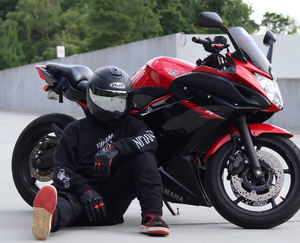
How I Take Better Motorcycle Photos
I used to think better motorcycle photos came down to better gear. A new lens, a new body, better presets. That helped a little, but not nearly as much as learning how to slow down and be intentional.
Most bad motorcycle photos fail for the same reasons. The bike is not prepped, the angle is lazy, the light is fighting you, or the background is doing all the talking. The fixes are not complicated, but they do require paying attention.
These are the techniques I keep coming back to. They work whether I’m shooting a track day, a roadside pull-off, or even something quick for a listing or a social post.
Composition matters more than settings
Before I touch the camera, I look at where the bike is sitting and ask whether it actually belongs there. I’ve come to learn that a good motorcycle photo usually makes sense even before you notice the bike itself.
If I’m shooting a sportbike, I look for lines in the environment that suggest speed or direction, such as curves in the road, pit lane markings, or barriers. Adventure bikes feel right when there’s space and terrain around them, while cruisers tend to work better with open roads or simple industrial backdrops.
I avoid clutter at all costs. Poles, trash cans, signs, and random cars all pull attention away from the bike, and they will show up in the final image even if I did not notice them at the time. If the background feels busy, I move the bike or move myself.
Centering the bike works sometimes, but most of the time I place it slightly off-center and leave space in front of it. That bit of negative space gives the photo direction and makes it feel intentional instead of parked.
Angles are everything
Most people shoot motorcycles from standing height because it’s easy, and that is also why so many photos look flat.
I get lower than feels natural. Shooting from just below handlebar height immediately makes the bike look more aggressive and planted. Three-quarter angles, where you can see both the front and side of the bike, are almost always better than shooting perfectly side-on.
Small changes make a big difference. I’ll take a step left or right, crouch a little more, or raise the camera above my head just to see what changes. Reflections shift, backgrounds clean up, and the bike suddenly looks better without touching a single setting.
If I’m going for context, such as track layouts, scenery, or crowds, I’ll shoot from higher up. If the goal is drama, low and close usually wins.
Light will make or break the shot
Good light covers up a lot of mistakes, while bad light makes even expensive bikes look dull.
I try to shoot early or late whenever possible. Golden hour softens everything and gives paint and metal a natural depth that you just don’t get at noon. Overcast days are underrated as well, since clouds act like a giant diffuser and keep reflections under control.
Direct overhead sunlight is the hardest situation. When I can’t avoid it, I rotate the bike so the sun hits it from the side rather than straight on, which alone can turn blown highlights into usable detail.
I pay close attention to where the light falls across the tank and fairings. If the shape disappears, I move.
Motion shots take practice, but they’re worth it
Static photos are fine, but motion photos are what people remember.
Panning shots are the easiest way to add energy. I start with a slower shutter speed than feels comfortable, usually 1/60 and accept that most frames won’t be keepers, that’s normal. For me it is not unusual to take 200 - 500 shots on a busy shoot and keep maybe 100 of them. It is really a numbers game and depends what the day calls for.
The key is smooth movement. I plant my feet, rotate my torso, follow the bike through the frame, and keep moving after the shutter clicks. When it works, the bike stays sharp and the background streaks just enough to suggest speed.
Even one successful panning shot can be the highlight of a whole set.
Technical choices should support the idea, not lead it
I don’t obsess over gear, but I do choose lenses intentionally. Alot of riders ask what camera I’d recommend starting with, and honestly the modern go-to baseline for motorcycle photography is a compact mirrorless body with fast autofocus and good dynamic range, I personally use the Canon R10 but many others also use the Sony a7.
Wider lenses work well when I want environment and drama, but they exaggerate proportions if I get too close. Mid-range lenses are my go-to for clean bike shots and rider portraits, while longer lenses compress the scene and make details feel tighter and more deliberate.
Shutter speed depends on intent. If I want frozen detail, I go fast. If I want motion, I slow down and accept the learning curve.
I shoot RAW when I can because it gives me breathing room later without forcing heavy edits.
Clean the bike, but don’t turn it into a mirror
A dirty bike almost never photographs well. Bugs on the headlight, streaks on the visor, and dust on the tank all jump out in photos and wow is it annoying to edit when you are a perfectionist.
That said, freshly polished paint can be just as bad. High-gloss surfaces reflect everything, including me, the sky, and whatever else is nearby, same problem on the other end of the spectrum.
My approach is simple; I wash the bike, skip heavy wax right before shooting, and carry a microfiber cloth with a little isopropyl alcohol to clean small areas on the spot. Those small touch-ups matter more than people think and save you a lot of time in post.
Let the setting reinforce the bike’s purpose
Some combinations just work. Adventure bikes look right in open terrain, sportbikes feel natural at the track or on twisty pavement, and naked bikes or cruisers pair well with simple, gritty environments.
I avoid matching colors too closely unless it is with intent for a specific theme but this is rare. A green bike in dense greenery disappears, while neutral or contrasting backgrounds help the bike stand out without fighting for attention.
If the location doesn’t add anything, it’s probably hurting the shot.
Editing should feel invisible
Editing is where a lot of motorcycle photos go off the rails.
I start with basic exposure and white balance, then nudge contrast and clarity just enough to bring out shapes and textures. I’m careful with saturation because paint already has plenty of color.
Consistency matters more than drama. A clean, cohesive set of photos looks more professional than one heavily edited standout surrounded by mismatched images.
If the edit draws attention to itself, I’ve probably gone too far.
Phones work if you respect their limits
Phones can produce solid motorcycle photos, especially in good light. This is where I along with many other photographers start. Technique > Tech every time. A pro can make a polaroid look amazing, it is all about technique and patience.
I clean the lens every time, lock exposure instead of letting the phone guess, and stay cautious with portrait mode, since wheels and mirrors often end up with strange edges. Bonus tip, use “Pro” mode on your camera if it is an option. This will give you more control over ISO, Shutter speed, so on.
I don’t expect phone shots to replace a camera, but with decent composition and light, they’re more than good enough for quick content.
Planning beats improvising
The best shoots usually start with a loose plan.
I decide what the photos are for, what mood fits the bike, and which details matter. That keeps me focused and stops me from spraying random frames.
Even five minutes of planning saves time and improves results.
What I check before shooting
Before I start shooting, I run through a short mental checklist to make sure the bike is clean but not overly glossy, the background isn’t fighting the subject, the angle adds shape and intent, the light works with the bike rather than against it, and small details like the visor, mirrors, and controls are clean.
Those basics solve most problems before they ever show up in the edit. Practice these one at a time. You don’t need new gear to see improvement, just a little patience and intention. Ten extra minutes of setup usually shows in every single frame.